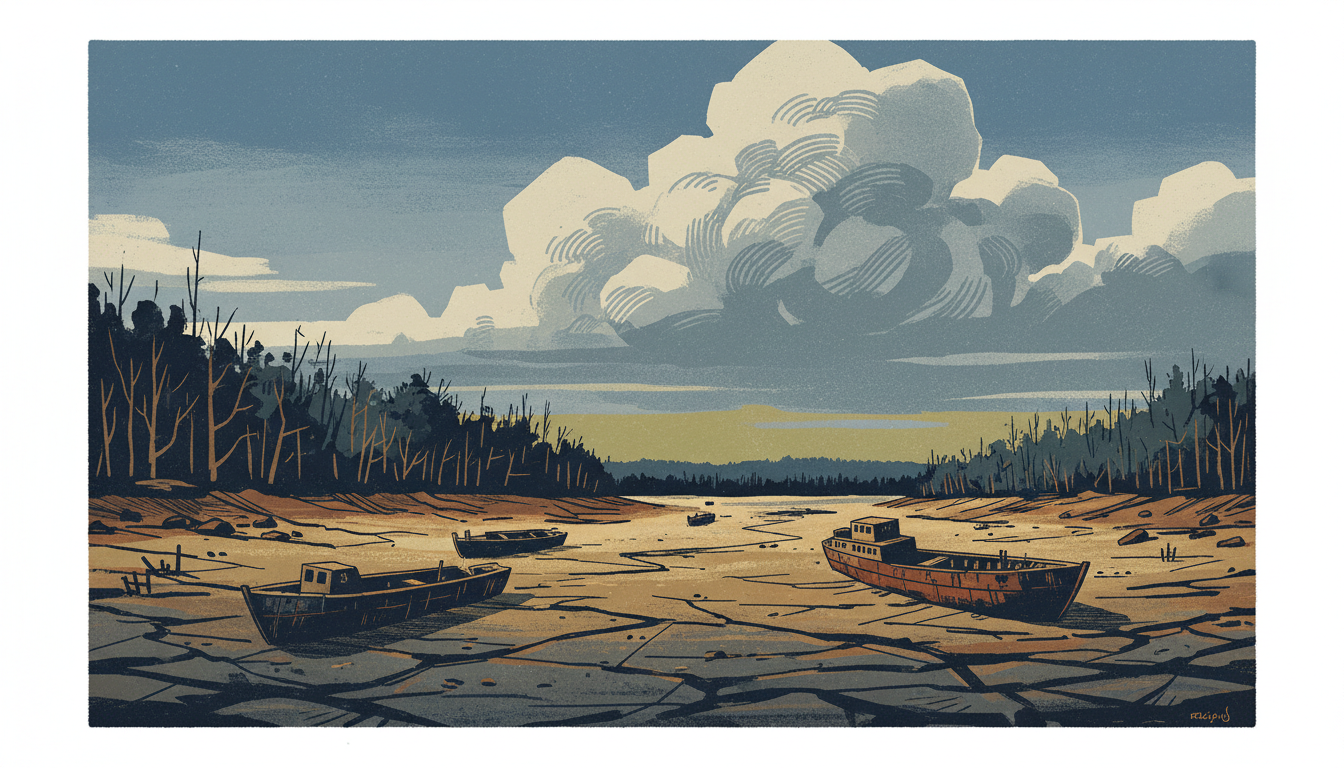
Europe is enduring its fifth heatwave since May 2026, leading to record drought that has lowered the Danube River to historic lows and revealed sunken Nazi warships scuttled during World War II, according to CBC News.
Between June and July, extreme heat conditions caused approximately 25,000 heat-related deaths across the continent. The heatwave and drought have significantly disrupted agriculture, energy production, especially nuclear plants using river water for cooling, and shipping routes, officials said.
The drought's effects are visible on the Danube, which runs through 10 countries including Germany, Austria, Hungary and Romania. Low water levels have uncovered about a dozen Nazi German warships deliberately sunk in 1944 to block Soviet advances. Other World War II relics, such as a German military motorcycle in Hungary and an unexploded British bomb in Slovakia, have emerged as well, reported The Guardian on Aug. 8.
Romania and Hungary, among the hardest hit, have implemented emergency water use restrictions and adjusted power station turbine operations to cope with the river's declining flow. Experts warn these measures may be insufficient if drought conditions continue.
Climate scientists link the persistent heatwaves and drought primarily to fossil fuel-driven climate change. The Copernicus Climate Monitoring Service noted a temperature anomaly of +2.79°C in Western Europe this summer compared to the 1991-2020 average, intensifying stress on natural and human systems.
According to a CBC News report, "The intensity and frequency of these heatwaves are consistent with climate change projections driven by human greenhouse gas emissions." A climate researcher at the German Meteorological Service indicated that if emissions remain high, Europe faces worsening conditions.
Canada is also grappling with increased extreme heat and wildfire activity, which authorities have attributed to human-driven climate change. Canadian researchers emphasize the shared global challenge posed by such climatic shifts and the urgent need to reduce fossil fuel emissions.
The resurfacing of World War II shipwrecks on the Danube symbolizes a broader impact of the climate crisis, threatening not only current livelihoods and economies but also cultural and historical heritage sites across Europe. Preservation experts caution the potential loss of these relics and call for heightened awareness and protective measures.
As Europe confronts this heat crisis, governments balance immediate emergency responses with long-term climate action policies. The drought strain on river navigation and hydropower production underscores vulnerabilities in infrastructure and energy security in the face of climate extremes.
With Europe's summer heatwaves setting new records and serious fallout for health and economy, officials stress that collaborative international efforts are critical. The unfolding situation along the Danube exemplifies how climate change crosses borders and sectors, demanding coordinated adaptation and mitigation strategies.